What is Plastic Injection Molded Parts and Their Benefits?
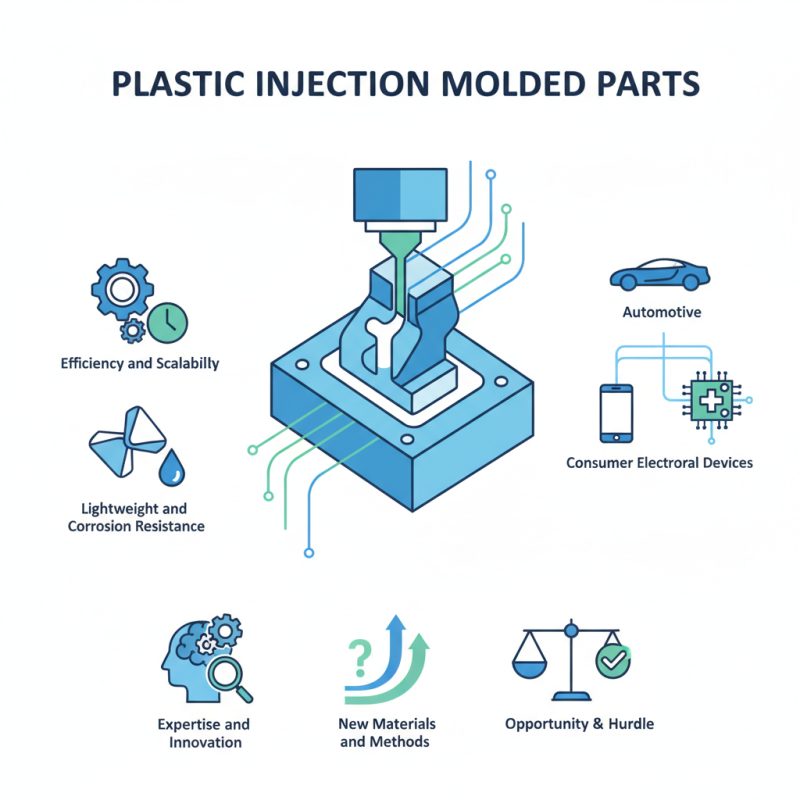
Plastic Injection Molded Parts are essential in today’s manufacturing landscape. Renowned expert Dr. Emily Collins states, “The precision of plastic injection molding is unmatched.” This technology helps create complex shapes with tight tolerances. Unlike traditional methods, it offers efficiency and scalability.
These parts are used in various industries, from automotive to consumer electronics. Their lightweight nature and resistance to corrosion make them ideal for many applications. However, challenges exist. Companies must prioritize material selection and adhere to design guidelines.
Understanding plastic injection molded parts requires expertise and experience. Companies need to invest in training and innovation. As the industry evolves, new materials and methods emerge. This constant change can be both an opportunity and a hurdle.
What are Plastic Injection Molded Parts?
Plastic injection molded parts play a vital role in modern manufacturing. This process involves injecting molten plastic into a mold. As the plastic cools, it takes the shape of the mold. The versatility of this method allows for the production of complex designs. These parts are used in various industries, from automotive to consumer goods.
The benefits of injection molded parts are significant. They can produce high volumes with consistent quality. The precision of the parts ensures that they fit together well in assemblies. However, the setup costs for molds can be high, which might discourage smaller businesses. Despite this, the durability of the parts often justifies the investment. The ability to use various materials adds to their appeal.
Challenges exist in the injection molding process. Achieving the desired finish can require multiple iterations. Flaws in the mold design can lead to waste and inefficiency. Addressing these issues often requires expert knowledge and experience. Continuous improvement and adaptation are crucial to ensure the best results.
The Process of Plastic Injection Molding Explained
Plastic injection molding is a widely used manufacturing technique for producing components. Understanding the process is crucial for industries like automotive and consumer goods. In this method, plastic pellets are heated until molten and then injected into a mold. This allows for intricate designs and high-volume production. In fact, the global plastic injection molding market is projected to reach $367 billion by 2027, according to industry reports.
During the process, precision is key. Engineers often spend extensive time optimizing mold designs. Small variations can lead to defects, impacting product performance and durability. It's noted that nearly 10% of molded parts may have some form of inconsistency, which can affect total production efficiency. This emphasizes the importance of continual refinement in design and production processes.
Furthermore, injection molding offers several benefits. It allows for high repeatability, reducing manufacturing costs in mass production. However, not all materials are suitable for every application. Some plastics can warp or degrade, demanding careful selection. Maintaining a balance between material choice and mold design is critical for achieving desired outcomes. While the durability of molded parts is well-documented, the industry must continually innovate to address challenges like material sustainability and product lifecycle.
Key Materials Used in Injection Molded Parts
Plastic injection molded parts are widely used across various industries. The choice of materials significantly impacts the quality and efficiency of the molded products. Common materials include ABS, polycarbonate, and polypropylene. These materials are favored for their excellent mechanical properties and versatility.
ABS (Acrylonitrile Butadiene Styrene) is tough and impact-resistant. It is suitable for applications ranging from automotive to consumer electronics. According to a market research report by Grand View Research, the global market for ABS plastic is expected to reach $25 billion by 2030. Polycarbonate, known for its high strength and clarity, is often used in applications requiring transparency, like eyewear lenses.
Polypropylene is lightweight and has good chemical resistance. It is used in packaging and automotive parts. The global polypropylene market size was valued at approximately $105 billion in 2021 and is projected to grow, as stated by Mordor Intelligence. Selecting the right material is crucial, but it's also essential to consider the environmental impact of these plastics. Continuous reflection on material choices will drive better practices in the industry.
Advantages of Plastic Injection Molded Parts in Manufacturing
Plastic injection molded parts offer numerous advantages in manufacturing, making them a popular choice across various industries. One key benefit is the ability to produce complex shapes with high precision. This process allows for intricate designs that would be difficult or impossible to achieve with traditional manufacturing methods. The use of advanced machinery ensures that each part meets strict tolerances, which enhances overall product quality.
Additionally, plastic injection molding is highly efficient. It can create large quantities of parts in a relatively short time. This efficiency leads to reduced production costs and minimization of waste. However, achieving this efficiency requires careful planning and expertise in mold design and maintenance. In some cases, the selection of materials may limit design flexibility. Thus, manufacturers must weigh their options carefully.
Sustainability is another consideration. While plastic products can have a negative environmental impact, advancements in technology are making it possible to use recycled materials. Innovation in bioplastics also presents an opportunity for greener manufacturing. Nevertheless, the durability of plastic parts can be seen as a double-edged sword; they last long, but they contribute to waste if not disposed of properly. Manufacturers should reflect on these factors when choosing to utilize this process.
Market Trends and Industry Statistics on Injection Molding
The injection molding industry is rapidly evolving. In 2022, it was valued at approximately $108.6 billion, with projections suggesting it will reach $151.8 billion by 2030. This growth reflects increasing demand across various sectors, including automotive, healthcare, and consumer goods. As manufacturers seek efficiency, they often invest in advanced technologies to enhance production capabilities.
Sustainability trends also influence the market. Eco-friendly materials are gaining traction, aligning with global sustainability goals. According to a recent report, nearly 25% of manufacturers plan to shift towards bio-based plastics by 2025. However, the transition can be challenging, as sourcing materials and adjusting processes require significant effort. Companies must balance innovation with reliability.
Moreover, quality control remains a crucial aspect. It’s essential to monitor every stage of production. Over 32% of industry leaders identify improved quality assurance as a key focus for future investments. While new technologies promise enhanced precision, integrating them into existing workflows can pose difficulties. Therefore, continuous improvement in processes and materials will define industry success moving forward.
What is Plastic Injection Molded Parts and Their Benefits? - Market Trends and Industry Statistics on Injection Molding
| Dimension | Value |
| Global Market Size (2022) | $36.4 Billion |
| Expected CAGR (2023-2028) | 4.3% |
| Leading Application Sector | Automotive |
| Key Material Used | Polypropylene (PP) |
| Environmental Impact Awareness (%) | 78% |
| Recycling Rate of Plastic Parts (%) | 25% |
| Projected Growth in Asia-Pacific Region (%) | 5.1% |