How to Choose the Best 12V RV Fridge?
Choosing the right 12v Rv Fridge can make a long journey calmer, safer, and more comfortable. A suitable model keeps food cold without draining your battery before breakfast. However, the best refrigerator is not always the largest or most expensive option.
Begin with your travel habits. A weekend camper may need a compact 40-liter unit, while a family crossing hot regions may require 80 liters or more. Measure the cabinet opening carefully. Leave space for ventilation, hinges, and cable access. A fridge that fits on paper may fail inside a crowded RV.
Power use deserves close attention. Check the manufacturer’s rated amp draw, daily energy consumption, and low-voltage protection. A 12V compressor model usually performs well on uneven roads and changing outdoor temperatures. Still, battery capacity, solar input, ambient heat, and door-opening habits affect real results. A printed “low energy” claim needs independent testing.
Think about noise at night. Even a quiet compressor can disturb light sleepers in a small cabin. Inspect the warranty, service network, replacement parts, and temperature controls. Reliable brands publish clear technical data and safety certifications. Independent reviews can help, but individual experiences differ. One owner’s excellent result may depend on a larger battery bank.
There is no perfect choice. A careful comparison is better than a rushed purchase. This guide examines cooling performance, capacity, installation, efficiency, durability, and value. It also considers overlooked details, such as door direction and food organization. Small decisions often shape the entire camping experience.
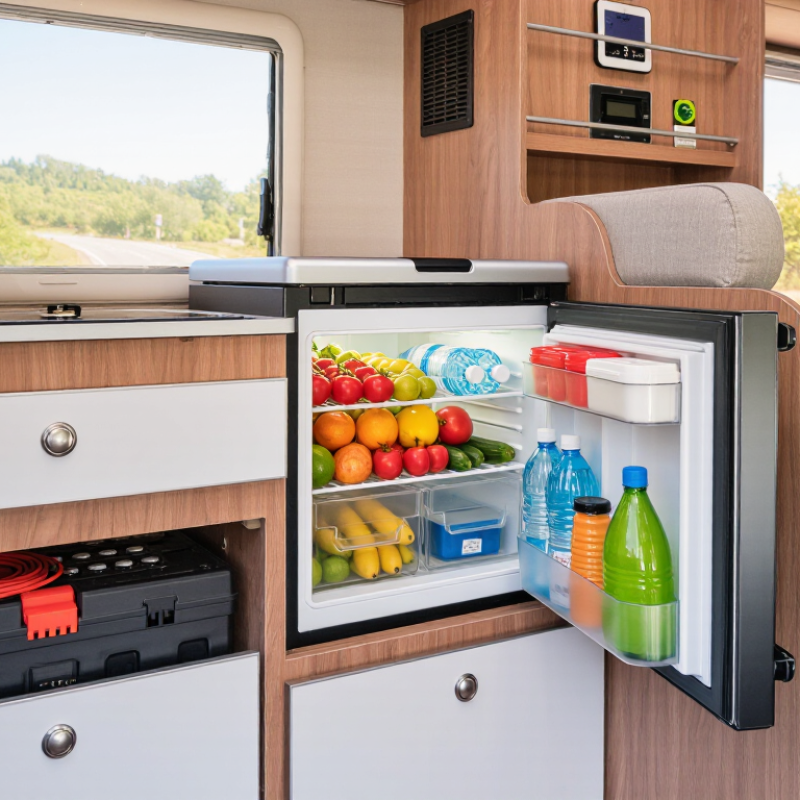
Understanding 12V RV Refrigerator Types and Cooling Systems
How to Choose the Best 12V RV Fridge?
Understanding the cooling system is more important than choosing the largest capacity. A 12V compressor refrigerator uses vapor-compression technology, similar to a household fridge. It cools quickly and performs reliably in hot weather. It also works well when the RV is parked on uneven ground. However, its compressor creates a noticeable hum, and startup current can briefly challenge a small battery system.
A three-way absorption refrigerator uses heat instead of a mechanical compressor. It may operate on 12V electricity, shore power, or another permitted fuel source, depending on the model. This design is quiet and convenient for extended camping. Yet, it usually cools more slowly and must remain reasonably level. Poor ventilation behind the refrigerator can also reduce performance. Thermoelectric coolers are simpler, lighter, and less expensive. They are better for drinks than for safely storing perishable food.
Check real-world energy use, not only the advertised amp rating. A compressor may draw more power while running, but it cycles off after reaching temperature. Insulation, ambient heat, door openings, and ventilation change the daily consumption. Measure battery capacity carefully. A small solar setup may struggle during cloudy weather. I would also leave clearance around the vents, even when the installation guide seems flexible. That detail is easy to overlook. Test the refrigerator before a long trip, because a cold interior does not always mean stable food temperatures.
Measuring Available Space and Choosing the Right Capacity
How to Choose the Best 12V RV Fridge?
Measuring Available Space and Choosing the Right Capacity
Measure the cabinet opening, not the old refrigerator. Record its height, width, and depth in millimeters. Then measure twice. RV cabinets can taper slightly, especially near the floor. Leave space for ventilation, wiring, and door movement. A tight fit may look efficient, but it can restrict airflow and increase power use.
Check the hinge side and confirm the door can open fully beside a wall or seat. Also measure the route from the entrance to the installation area. I once focused on cabinet dimensions and forgot a narrow doorway. The refrigerator fit inside the cabinet, but it could not reach it. That mistake changed how I plan installations.
Choose capacity from actual habits, not the largest number available. A compact unit may suit one traveler carrying fresh food for two days. A larger household may need separate areas for drinks, vegetables, and frozen items. Remember that shelves and insulation reduce usable space. A stated capacity is not always practical capacity. For a 12V system, estimate daily energy use and compare it with battery storage, solar input, and charging time. Hot weather, frequent door opening, and poor ventilation can raise consumption. My early estimates were too optimistic. Testing the refrigerator during a normal trip gives more reliable results than relying only on specifications.
Calculating Power Needs for Your RV Electrical System
How to Choose the Best 12V RV Fridge?
A 12V RV fridge can look efficient on its label. Real camping conditions are less predictable. Start with watts, operating hours, and battery voltage. The basic formula is simple: watts × hours ÷ volts = amp-hours. A fridge averaging 45 watts for eight hours uses 360 watt-hours, or about 30 amp-hours at 12 volts. Add 10–15% for wiring and inverter losses when applicable. The U.S. Department of Energy’s Energy Saver guidance also recommends accounting for conversion losses in battery-powered systems.
My first estimate was too optimistic. I ignored warm weather, frequent door openings, and airflow around the cabinet. A safer design assumes 35–50 amp-hours daily for the fridge alone. Add lights, water pumps, fans, and device charging. A 100Ah lead-acid battery may provide only about 50Ah safely, while lithium systems often allow roughly 80Ah. These are planning values, not guarantees. Battery age changes everything. NREL’s PVWatts documentation uses a default 14% system-loss assumption, which is useful when estimating solar recovery. A 200W solar array may still produce far less than expected under clouds, shade, or winter sun. Check your actual battery monitor for several trips. Numbers on paper can mislead. The RV Industry Association’s 2024 market reporting shows continued recreational-vehicle demand, but electrical layouts vary widely, so one standard calculation cannot fit every coach.
Evaluating Installation Requirements, Budget, Warranty, and Support
How to Choose the Best 12V RV Fridge?
A 12V RV fridge should match your installation space, not just its advertised capacity. Measure cabinet width, depth, height, door swing, and ventilation clearance before buying. In my experience, a few millimeters can become a major problem after insulation is added. Check the wiring route, fuse rating, cable length, and battery location. Long, thin cables may cause voltage drop and poor compressor performance. The RV Industry Association reported 11.2 million U.S. households owned an RV in its 2021 owner profile, showing how varied installation conditions can be.
Budget for more than the refrigerator. Include wiring, circuit protection, mounting hardware, ventilation changes, and possible battery upgrades. A low purchase price may hide higher energy demand or difficult installation. Compare the unit’s daily amp-hour consumption under realistic conditions, including hot weather and frequent door opening. The numbers can look different in a showroom. They often do.
Warranty terms deserve careful reading. Confirm coverage length, compressor protection, labor exclusions, and shipping responsibilities. Ask whether support is available by phone or email, and whether replacement parts remain available after purchase. A written service procedure matters more than confident sales language. Industry service research consistently identifies repair access and response time as major ownership concerns, but published RV data is sometimes incomplete. That uncertainty should influence your budget. Keep invoices, installation photos, and voltage readings. Small records can protect a large investment.

