How to Choose the Best Manipulator Robots for Your Business?
In the rapidly evolving world of automation, choosing the right Manipulator Robots for your business is crucial. These machines can boost efficiency and enhance productivity. However, making a choice can feel overwhelming. There are various types of manipulator robots, each designed for specific tasks. Understanding these differences is essential for your operational needs.
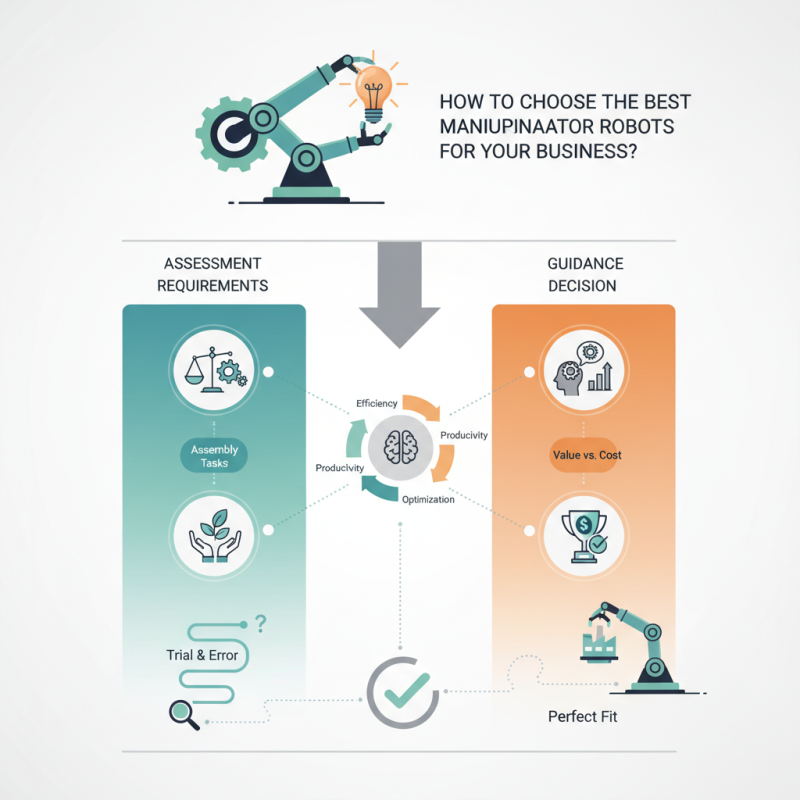
The effectiveness of manipulator robots varies greatly. Some excel in assembly tasks, while others are better suited for delicate handling. It’s vital to assess your requirements carefully. For instance, consider the weight and complexity of the items they will handle. You may need to invest time in trial and error. Not every robot will meet your expectations at first.
Additionally, engaging with industry experts can provide valuable insights. They can guide you in navigating the myriad options available. Your budget will also play a significant role in your decision-making process. Remember, a higher price tag doesn’t always guarantee better performance. Careful evaluation and a realistic approach can lead you to the perfect manipulator robots for your business.
Identifying the Needs of Your Business for Manipulator Robots
Understanding the specific needs of your business is crucial when selecting manipulator robots. Begin by assessing the tasks these robots will perform. Will they handle materials, assemble components, or perform intricate tasks? Each application requires different capabilities. For example, a robotic arm designed for assembly might need a higher precision than one designated for material handling.
Next, evaluate the work environment. Is it hazardous or involves tight spaces? Some robots are designed for clean environments, while others can work under harsh conditions. Consider the space limitations and the weight they will lift. These factors will impact the choice of the robot's design and capacity.
Finally, think about integration with existing systems. Will the robot work alongside human workers? This requires careful planning to ensure safety and efficiency. A mismatch in technology could lead to operational challenges. Reflect on your current workflow and identify gaps where automation could enhance productivity.
Evaluating Various Types of Manipulator Robots Available
When evaluating various types of manipulator robots, it's essential to understand their specific applications. These robots vary in design and functionality. For instance, articulated robots are versatile, suitable for tasks requiring reach and flexibility. They excel in assembly and packaging roles but might struggle in tight spaces due to their size. In contrast, SCARA robots offer precision in horizontal movements, ideal for tasks like component assembly.
Collaborative robots, or cobots, are another option. They work alongside human operators, enhancing productivity without safety concerns. However, they may have limitations in lifting heavier loads. Understanding these nuances is crucial for making informed choices. Your business requirements dictate the features to prioritize, such as payload capacity, speed, and workspace compatibility.
Integration with existing systems is also a key consideration. Some robots require complex programming, which could lead to increased downtime during implementation. While picking the right manipulator can elevate operational efficiency, making a hasty decision can bring about unexpected issues. Evaluate your long-term goals to ensure the chosen technology aligns with future needs. Every business has unique circumstances, and flexibility in selection is vital.
How to Choose the Best Manipulator Robots for Your Business? - Evaluating Various Types of Manipulator Robots Available
| Type of Robot | Payload Capacity (kg) | Reach (m) | Degrees of Freedom | Typical Applications |
| Articulated Robot | 12 | 1.5 | 6 | Welding, Material Handling |
| SCARA Robot | 10 | 0.8 | 4 | Assembly, Packaging |
| Delta Robot | 5 | 0.6 | 3 | Sorting, Picking |
| Collaborative Robot (Cobot) | 8 | 1.2 | 6 | Human-Robot Collaboration, Assembly |
| Cartesian Robot | 20 | 2.0 | 3 | Pick and Place, CNC Machining |
Assessing Compatibility with Existing Systems and Infrastructure
When considering manipulator robots for your business, compatibility with existing systems is crucial. Assess the infrastructure you currently have. Is it equipped for seamless integration? Evaluate your software and hardware systems to determine their readiness for automation. This step can prevent future setbacks and costly modifications.
Next, analyze the communication protocols used in your setup. Different robots may employ varying standards. Will they work harmoniously with your current equipment? Discrepancies can lead to inefficiencies. Consider conducting a small pilot test to monitor integration. Observing the interaction provides insights into potential challenges.
Take time to consult with your technical team. Their insights can highlight overlooked aspects of compatibility. Avoid rushing the decision; a thorough assessment reduces risks. Investing in the right manipulator robot not only enhances productivity but also ensures a smoother transition into automation. Be prepared for adjustments along the way and remain open to re-evaluating your systems as needed.
Compatibility Assessment of Manipulator Robots with Existing Systems
Considering Budget and Total Cost of Ownership
When selecting manipulator robots for your business, budget is a crucial factor. Consider not just initial costs but also the total cost of ownership (TCO). TCO includes maintenance, training, and operational expenses over time. A cheaper initial price can lead to higher maintenance costs, negating any savings.
Evaluate the robot’s expected lifespan and its efficiency. Robots that break down often can disrupt operations and increase repair costs. Researching user reviews can provide insight into reliability. Additionally, factor in the cost of necessary upgrades and software. They can add significantly to your budget in the long run.
It’s important to balance quality with costs. Investing a bit more upfront for a reliable option could save money later. Always assess the specific needs of your operations. Sometimes, a more expensive robot may fit better and work efficiently. Analyze all these components carefully to make an informed decision.
Reviewing Supplier Reputation and Support Services
When selecting manipulator robots, supplier reputation is crucial. A recent market report highlights that businesses lose 25% of operational efficiency due to unreliable equipment. Therefore, assessing a supplier's track record can prevent costly downtime. Look for suppliers with proven longevity in the field. Companies with over a decade of experience often provide better insights into maintaining robotic systems.
Support services are equally important. According to industry studies, 70% of businesses emphasize the need for robust post-purchase support. Quick response times and technical assistance can significantly reduce operational hiccups. It's worth investigating if a supplier offers comprehensive training and easy access to spare parts.
Yet, not all suppliers guarantee excellent support. Some may have a stellar reputation but lack commitment to service after the sale. Research and customer reviews can provide clarity. Always ask for references from current clients to gauge real-world support experiences. This can uncover potential red flags that may not be immediately obvious.

