Why Choose Industrial Metal Powder for Your Manufacturing Needs?
In the world of modern manufacturing, the role of Industrial Metal Powder is becoming increasingly vital. Expert in materials science, Dr. Emily Carter, once stated, “Industrial Metal Powder is revolutionizing how we think about production efficiency.” This insight reflects a growing trend towards more sustainable and efficient manufacturing processes.
Industrial Metal Powder offers unique advantages. It allows manufacturers to create complex shapes that were once deemed impossible. With its fine particles, designs can be realized with precision. Still, the industry faces challenges, such as consistent quality and cost control. These issues require continuous evaluation and improvement.
As manufacturers explore the potential of Industrial Metal Powder, they confront both opportunities and hurdles. It’s essential to stay informed and responsive to these dynamics. Balancing innovation with practicality is crucial in this evolving field. The future of manufacturing may well depend on how effectively we embrace Industrial Metal Powder and its myriad possibilities.
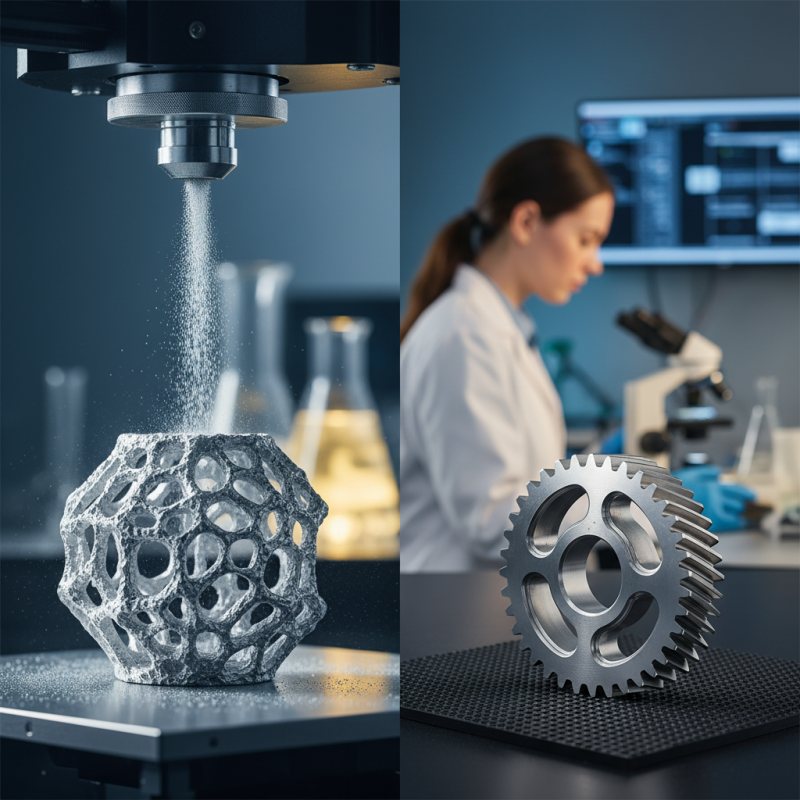
Benefits of Using Industrial Metal Powder in Manufacturing Processes
Industrial metal powders are gaining traction in diverse manufacturing processes due to their unique advantages. These powders facilitate additive manufacturing, which is projected to reach a market size of $40 billion by 2025, according to a recent industry report. The ability to build complex geometries with minimal waste sets metal powder apart. This aligns with sustainability goals, as additive processes often require less energy and materials compared to traditional methods.
The use of industrial metal powders offers enhanced mechanical properties. Reports indicate that components produced with these powders often exhibit superior strength and durability. For instance, parts made from metal powder can achieve densities of over 99%, resulting in items that withstand intense operational demands. However, challenges remain. The consistency of material quality can vary, affecting end-product reliability. Manufacturers must ensure that their sourcing and production processes uphold rigorous quality standards.
Moreover, the flexibility in design is noteworthy. Designers can use simulation software to optimize parts before production. This process reduces errors during the manufacturing phase. Nevertheless, it requires technical expertise. Manufacturers must invest in training for their teams to maximize the potential of metal powder technologies.
Benefits of Using Industrial Metal Powder in Manufacturing Processes
Types of Industrial Metal Powders and Their Applications
Industrial metal powders are essential in modern manufacturing. Various types serve different purposes, enhancing efficiency and product quality. Common types include stainless steel, aluminum, and titanium powders. Each has unique properties that suit specific applications.
Stainless steel powders are versatile. They are used in additive manufacturing and sintering processes. These powders provide durability and corrosion resistance.
Aluminum powders are lightweight and ideal for applications like aerospace and automotive parts. Their fine particle size allows for improved flow and packing density.
Titanium powders, known for their strength-to-weight ratio, are preferred in medical implants and high-performance components.
Tips: Always consider the powder's particle size distribution. Smaller particles flow better but may be more challenging to handle. Think about the environmental conditions during manufacturing as well. Powders must be stored properly to avoid contamination.
While these powders offer benefits, they also come with challenges. Improper handling can lead to oxidation or moisture absorption, compromising the final product's quality. Regular quality checks and proper storage techniques help mitigate these risks. Investing time in understanding the specific characteristics of each metal powder is crucial for success.
Key Considerations in Selecting Metal Powder for Production
When selecting metal powder for production, several key considerations come into play. The application of the metal powder is paramount. Different industries require different properties. For example, aerospace manufacturing needs powders with high strength-to-weight ratios. Conversely, automotive applications might prioritize cost-effectiveness more than mechanical properties.
Particle size is another crucial factor. Smaller particle sizes can create denser and more uniform components. However, processing smaller powders can be challenging. The shape of the particles also affects the flowability and packing density. Irregularly shaped particles might be cheaper but can lead to inconsistencies in the final product.
Quality control cannot be overlooked. Testing the purity and composition of metal powders is essential. Contaminants can compromise the integrity of the final parts. Regular certifications can provide assurance but might not guarantee every batch's quality. Manufacturers must balance cost and reliability throughout the sourcing process. It's a complex decision, requiring careful thought and evaluation.
Environmental Impact and Sustainability of Metal Powder Usage
Choosing industrial metal powder for manufacturing can have significant environmental implications. Metal powders are often sourced from recycled materials, reducing the need for mining. This contributes to lower carbon emissions and less ecological disruption. Additionally, these powders can be produced with minimal waste. However, this process needs continuous improvement. Industries must explore better recycling methods.
Sustainability is vital in modern manufacturing. Metal powders enable efficient material usage, often reducing the overall footprint. Their ability to form intricate shapes means less raw material is wasted during production. Yet, there are challenges. Not all metal powders are equally eco-friendly. The production methods vary, and some can be harmful. Companies must prioritize sourcing from responsible manufacturers to minimize environmental impact.
Why Choose Industrial Metal Powder for Your Manufacturing Needs? - Environmental Impact and Sustainability of Metal Powder Usage
| Material Type | Production Method | Recyclability | Environmental Impact | Applications |
| Stainless Steel Powder | Atomization | Highly recyclable | Low emissions, durable | Automotive, Aerospace |
| Titanium Powder | Chemical Reduction | Recyclable | Low environmental footprint | Medical, Aerospace |
| Aluminum Powder | Mechanical Alloying | Highly recyclable | Minimal waste production | Construction, Battery |
| Bronze Powder | Disintegration | Recyclable | Non-toxic, environmentally friendly | Art, Jewelry |
| Nickel Powder | Gas Atomization | Recyclable | Sustainable practices | Electronics, Batteries |
Future Trends in Industrial Metal Powder Technologies and Innovations
The landscape of industrial metal powder technologies is rapidly evolving. Innovations are emerging to enhance precision in manufacturing processes. Advanced techniques, like additive manufacturing, use metal powder to create complex geometries. This flexibility allows for lightweight designs without sacrificing strength. The growing interest in sustainable practices influences these trends. Companies are exploring recycled metal powders to reduce waste.
Recent developments focus on sintering technologies and powder atomization methods. These techniques improve the quality of the finished product. However, the adoption of new powder alloys requires careful consideration. Not all materials perform equally under different conditions. Manufacturers must invest in research and testing.
As industries push toward automation, the role of metal powders will expand. Intelligent systems will monitor powder characteristics more closely. This data-driven approach can lead to better quality control. Yet, challenges remain. Many companies struggle with the transition to these advanced processes. A clear understanding of new technologies is essential for success. The future of industrial metal powder depends on innovation, sustainable practices, and continuous adaptation.

