Why Choose a Built-in Bypass Soft Starter for Your Business?
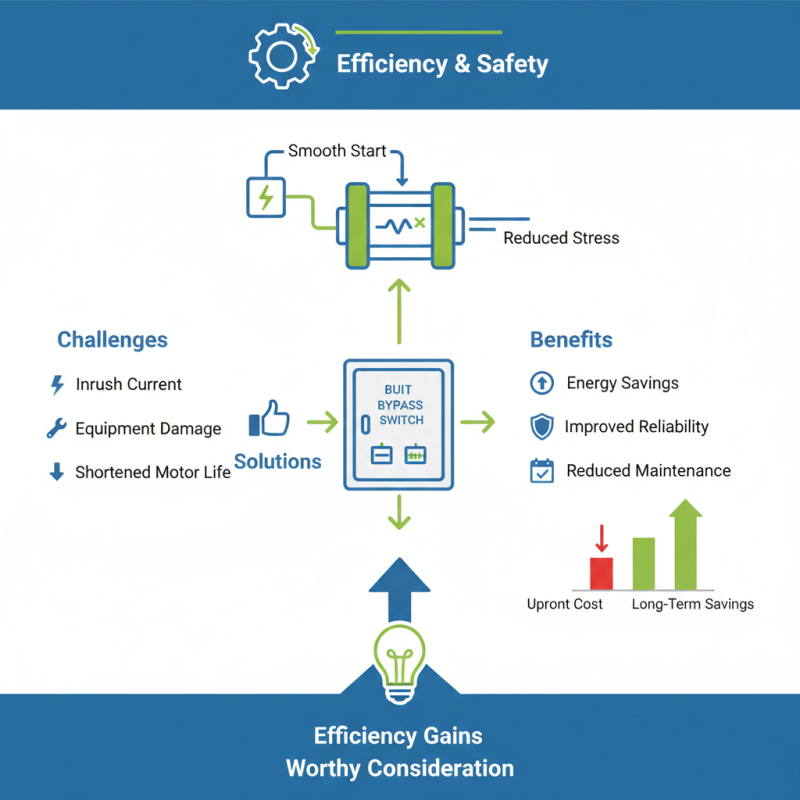
In an industrial setting, reliable motor control is crucial for efficiency and safety. A Built-in bypass soft starter can transform operations. This device provides an effective way to manage motor startups while reducing stress on both the motor and electrical components.
Businesses often face challenges that a standard starter cannot resolve. A built-in bypass soft starter offers a clear advantage, allowing for a smooth transition to full speed. It minimizes the inrush current that can lead to equipment damage. This feature not only extends the motor's life but also contributes to energy savings.
Yet, some may wonder if the added cost is worth it. While it requires an upfront investment, the long-term benefits often outweigh initial expenses. Improved reliability and reduced maintenance requirements can lead to significant savings. Adopting a built-in bypass soft starter may seem daunting, but the potential gains in efficiency make it a worthy consideration.
Understanding Built-in Bypass Soft Starters and Their Functionality
Built-in bypass soft starters are crucial in modern industrial operations. They manage electric motors' starting and stopping processes efficiently. According to the National Electrical Manufacturers Association, these devices can reduce energy consumption by up to 30%. This reduction leads to lower costs and improved system reliability. Their functionality allows for smooth motor start-ups, minimizing electrical and mechanical stress.
One key advantage is the built-in bypass feature. It enables seamless transitioning from the soft start mode to full voltage operation without any external relays or contactors needed. This simplicity decreases installation time and potential points of failure. In fact, a report from the International Energy Agency highlights that equipment downtime can lead to losses in the range of hundreds of thousands of dollars annually. By investing in built-in bypass soft starters, businesses can mitigate this risk effectively.
Tips for implementation: ensure that the selected model meets your specific motor requirements. Regular maintenance checks are essential to keep the devices running optimally. Staying updated with the latest industry standards can prevent costly mistakes in the long run. Emphasizing employee training on new technologies can further enhance operational efficiency. Consider these factors to maximize the benefits of your soft starter investment.
Advantages of Built-in Bypass Soft Starters for Industrial Applications
A built-in bypass soft starter offers numerous advantages for industrial applications. These systems allow smooth motor starting, reducing electrical and mechanical stress. This is crucial for prolonging motor life and minimizing maintenance costs. By integrating a bypass feature, operators can eliminate the need for external components, simplifying installation and reducing the overall footprint of the electrical system.
Tip: Ensure proper sizing and installation for optimal performance. Mismatches can lead to failures and inefficiencies.
Built-in bypass soft starters also enhance energy efficiency. They reduce inrush current during startup, lowering demand charges on electricity bills. This feature is particularly beneficial in environments with strict energy consumption regulations. However, careful consideration is needed regarding the motor type and load characteristics to achieve maximum benefits.
Tip: Regularly monitor the system for signs of wear. Addressing minor issues proactively can prevent major failures.
This technology can support various applications, from pumps to conveyors. Each application may require specific tuning for performance. Understanding load characteristics is essential for maximizing output.
Advantages of Built-in Bypass Soft Starters for Industrial Applications
Cost-Effectiveness and Energy Efficiency of Soft Starters
A built-in bypass soft starter offers significant cost-effectiveness and energy efficiency for businesses. These devices enable smooth motor start-ups while reducing energy spikes during the process. Traditional starters can draw excessive current, leading to increased energy costs. A soft starter minimizes this, maintaining energy consumption at more manageable levels.
Incorporating a soft starter can result in substantial long-term savings. Many businesses see a reduction in operational costs due to lower energy usage. Additionally, smoother starts can reduce wear and tear on motors. This often leads to fewer maintenance issues and a longer lifespan for equipment, enhancing reliability.
However, businesses should reflect on their specific needs. A bypass soft starter may not suit every application. Evaluating the system's demands and potential savings is critical. Understanding the unique environment will lead to better decisions. A thorough assessment could reveal that simpler solutions might serve just as well.
Key Considerations When Selecting a Soft Starter for Business Needs
When selecting a soft starter for your business, it’s crucial to consider various factors. A built-in bypass soft starter can provide significant advantages. It improves operational efficiency by reducing energy consumption during startup. This type of starter minimizes voltage spikes, protecting your equipment. The reliability of equipment is paramount for uninterrupted operations.
Tips: Evaluate the specific needs of your machinery. Analyze the starting current and torque requirements. A tailored soft starter can enhance performance.
Also, consider compatibility with existing systems. Not all soft starters fit seamlessly into every setup. You may face issues if the units aren’t designed for your equipment type. Researching the specifications is essential.
Lastly, pay attention to support and documentation provided. Quality manufacturers offer extensive resources. This ensures your team understands the installation and operation. Investing in a soft starter isn’t just a purchase; it influences long-term performance and reliability of your operations.
Why Choose a Built-in Bypass Soft Starter for Your Business? - Key Considerations When Selecting a Soft Starter for Business Needs
| Feature | Description | Benefits |
| Built-in Bypass | Allows for direct motor connection after start-up, reducing wear on components. | Enhanced efficiency and reduced energy costs. |
| Soft Start Technology | Gradually increases motor voltage to reduce inrush current. | Protection for motor and improved operational lifespan. |
| Compact Design | Space-saving units that can be installed easily in control panels. | Reduced installation space and costs. |
| User-Friendly Interface | Simple controls and settings for easy operation and monitoring. | Less training required for staff and improved ease of use. |
| Adaptability | Versatile for various types of motors and applications. | Flexibility to meet evolving business needs and configurations. |
Comparing Built-in Bypass Soft Starters with Traditional Starter Solutions
Built-in bypass soft starters are gaining traction in various industries due to their efficiency and reliability. In contrast to traditional starter solutions, which often require additional components, these advanced systems integrate bypass functionality directly. This integration streamlines installations and reduces space requirements. According to a recent industry report, companies can save up to 30% in installation time with built-in bypass systems.
Traditional soft starters frequently face issues related to maintenance and reliability. Components can wear out, leading to increased downtime and costs. Conversely, built-in bypass soft starters offer enhanced operational efficiency with fewer potential failure points. A study found that organizations using these systems experienced a 20% reduction in operational interruptions, attributing this improvement to their robust design.
Tips: Regularly inspect all electrical components to maintain optimal performance and reduce unexpected failures. Consider investing in training for your maintenance staff on the latest technologies. Staying informed can help prevent costly mistakes and enhance system reliability.

